
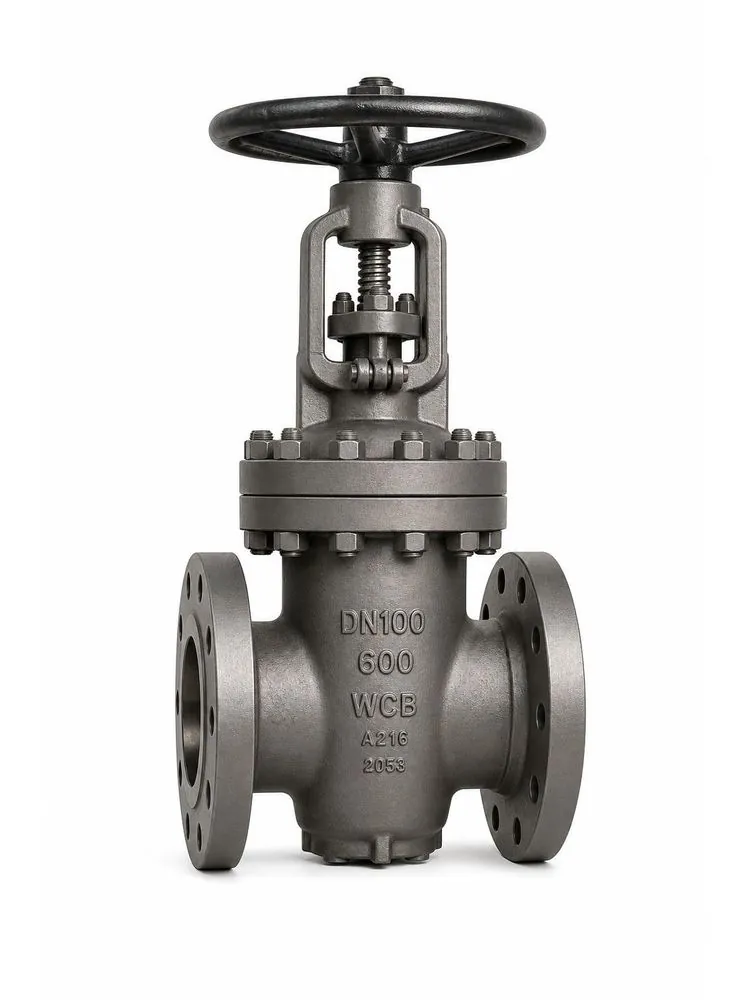
Gate Valve
CARBON STEEL BODY GATE VALVE FLANGES GGV1F6S-P16-XXX
The CARBON STEEL BODY GATE VALVE FLANGES GGV1F6S-P16-XXX is a linear-motion isolation valve designed for full-flow shut-off service with minimal pressure drop when fully open.
Product Overview
This gate valve provides reliable shut-off with a wedge gate design that fully opens or closes the flow path. Suitable for applications requiring minimal pressure drop and tight sealing in industrial piping systems.
Product Features
- Full bore design for minimal pressure drop
- Wedge gate for tight sealing
- Rising stem for visual position indication
- Suitable for shut-off applications
- Durable construction for long service life
Technical Specifications (For reference only. The actual parameters need to be verified with us).
| Parameter | Value / Unit |
|---|---|
| Product Type | Carbon steel gate valve, bolted bonnet, OS&Y rising stem |
| Model / Series | WCB / GGV1F6S-P16 |
| Pressure Rating | PN10 - PN16 |
| Body Material | Carbon Steel WCB |
| Disc Material | WCB wedge |
| Connection | Flanged |
| Actuation | Manual handwheel |
| Applicable Medium | Water, oil, gas, steam |
| Applicable Standard | Design API 6D / BS 1414, API 600; test API 598 |
| Design Standard | Design: API 600, API 6D / BS 1414 |
| Face-to-Face Standard | Face-to-face: API 6D |
| Flange Standard | Flange: ASME B16.5 / BS EN 1092 |
| Testing Standard | API 598 |
Related Products
FAQ
What is the difference between rising and non-rising stem?
Rising stem moves up/down with the gate, providing visual position indication; non-rising stem rotates in place, suitable for limited space.
Should gate valves be used for throttling?
No, gate valves are designed for fully open or fully closed service only; throttling causes seat erosion and vibration.
What is the difference between wedge and parallel gate?
Wedge gates use a tapered disc for tight shutoff against two seats; parallel gates use parallel discs, often with spring loading, for low-pressure service.
Why is the bonnet bolted rather than threaded?
Bolted bonnets provide higher pressure rating and easier maintenance; threaded bonnets are common for smaller, lower-pressure valves.
What is the typical pressure drop across a fully open gate valve?
Very low, typically less than 0.01 bar, making gate valves ideal for isolation service where minimal flow restriction is needed.